

Why unbranch
The page that drifts
Section titled “The page that drifts”Every team has the page: the PRD, the product spec, the Notion doc that says what the product does. It was accurate on the day someone wrote it. Since then, a meeting changed one feature and a Slack thread quietly dropped another. A coding agent built a third that nobody wrote down.
The page did not change, because nothing connects it to those decisions. Keeping it current is somebody’s chore, and nobody owns the chore.
The cost grows when AI writes part of the work:
- Another session, the same explanation. Each new agent session starts without the context, so people paste the same background again, and each paste is slightly different.
- The code changed. Was that the decision? An agent produces something close to what was asked. Without a record of what was agreed, nobody can tell whether the difference is a mistake or a decision.
- Agreed is not the same as delivered. A plan that was approved and a feature that ships are different facts. A document that cannot tell them apart misleads everyone who reads it.
What unbranch changes
Section titled “What unbranch changes”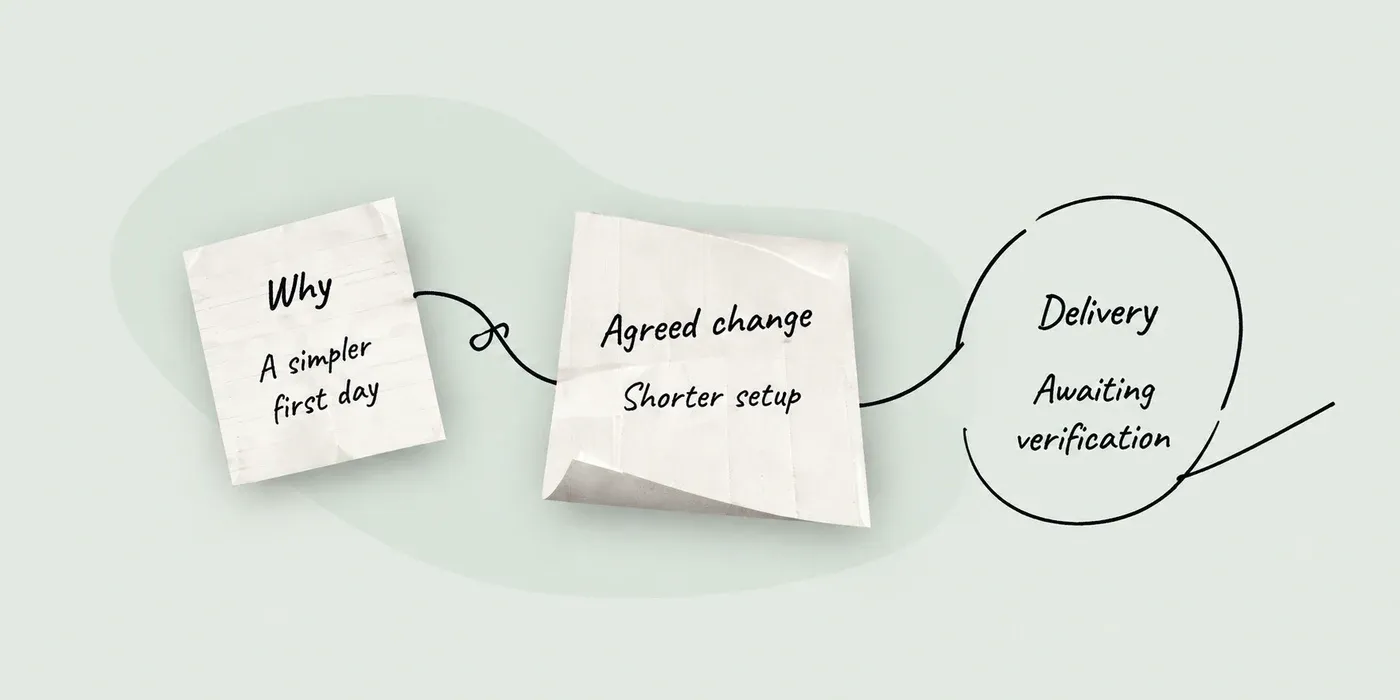
unbranch does not ask you to maintain a better page. It removes the page as something anyone maintains.
- The description is a projection of decisions. The model is built only from accepted proposals and verified delivery. The written view of your product is generated from that record, so it cannot drift from what the team agreed.
- Every part points back to its decision. Select any item and you can see the proposal that introduced it, who consented, the revision they agreed to and when it was delivered.
- Agents read the same record. A connected agent reads the agreed model instead of a pasted summary, and it drafts changes into the same loop your team uses.
What it does not claim
Section titled “What it does not claim”unbranch records intent, agreement and delivery. It does not check that your code is correct, and it does not make an agent more accurate on its own. It gives people and agents a shared record to check work against, and the habits that keep that record true. Best practices covers those habits.